The complete Selkirk Rex breed guide
Everything you need to know about the curly-coated cat with the personality of a teddy bear. History, temperament, care, health, and what makes them one of the most unique cat breeds in the world.
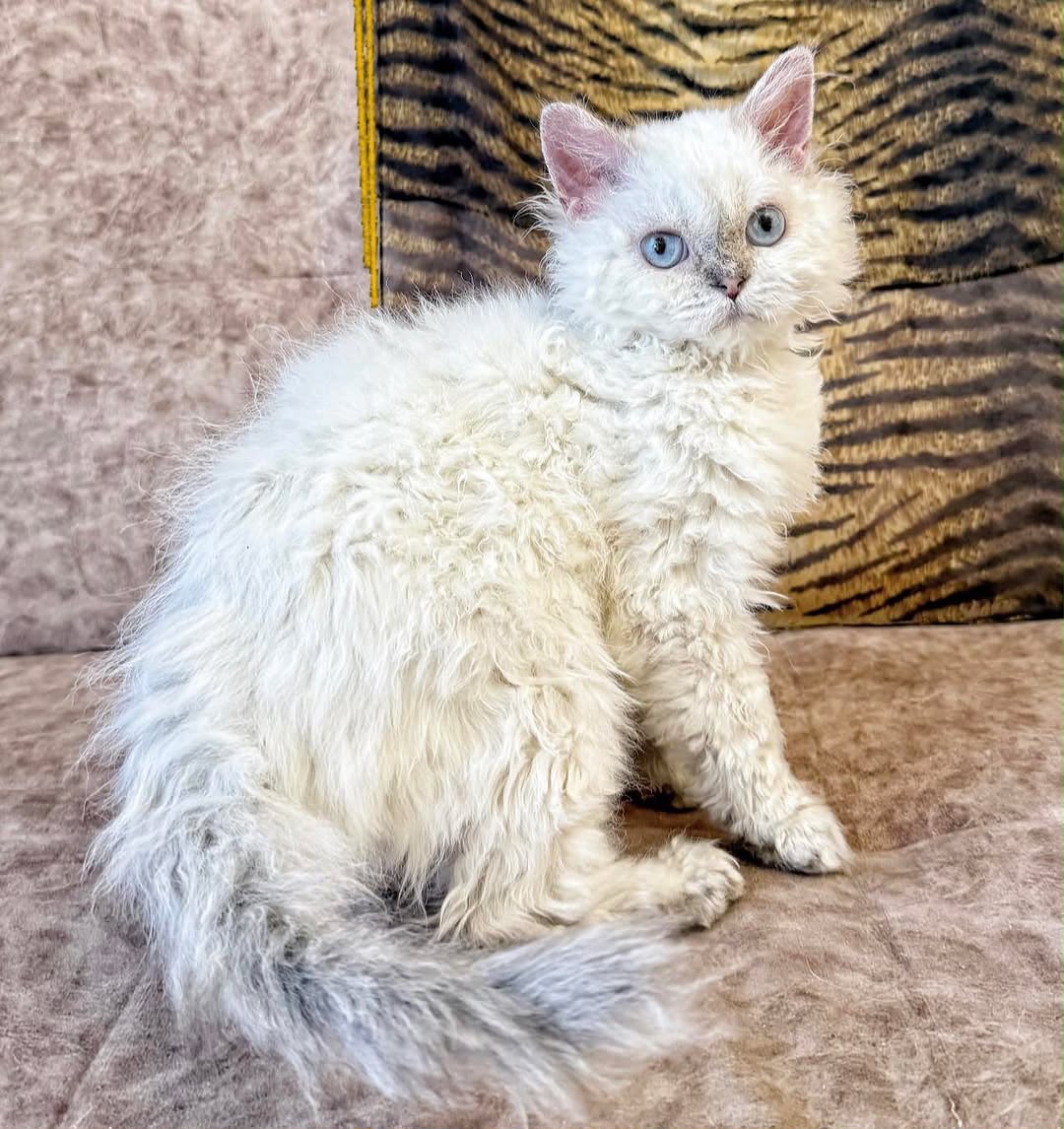
Origin
Montana, USA, 1987
Lifespan
10 to 15 years
Weight
6 to 16 pounds
Coat
Plush curly, short or long
Origin and history
The Selkirk Rex is one of the youngest cat breeds in the world, with a history that traces back to a single curly kitten born in Montana in 1987. The kitten, named Miss DePesto, was discovered in a litter of straight-coated kittens at an animal shelter. Her unique curly coat caught the eye of Persian breeder Jeri Newman, who recognized that the curls were the result of a previously unknown spontaneous genetic mutation.
Newman bred Miss DePesto with a black Persian male, and the resulting litter included three curly-coated kittens. This confirmed that the curly gene was dominant, meaning only one parent needed to carry it to produce curly offspring. Newman named the breed Selkirk after her stepfather, making the Selkirk Rex the only cat breed named after a person.
The breed was officially recognized by The International Cat Association (TICA) in 1992 and by the Cat Fanciers' Association (CFA) in 1994. From that single Montana shelter kitten, the Selkirk Rex has grown into a globally recognized breed loved for its plush coat and affectionate personality.
Physical description
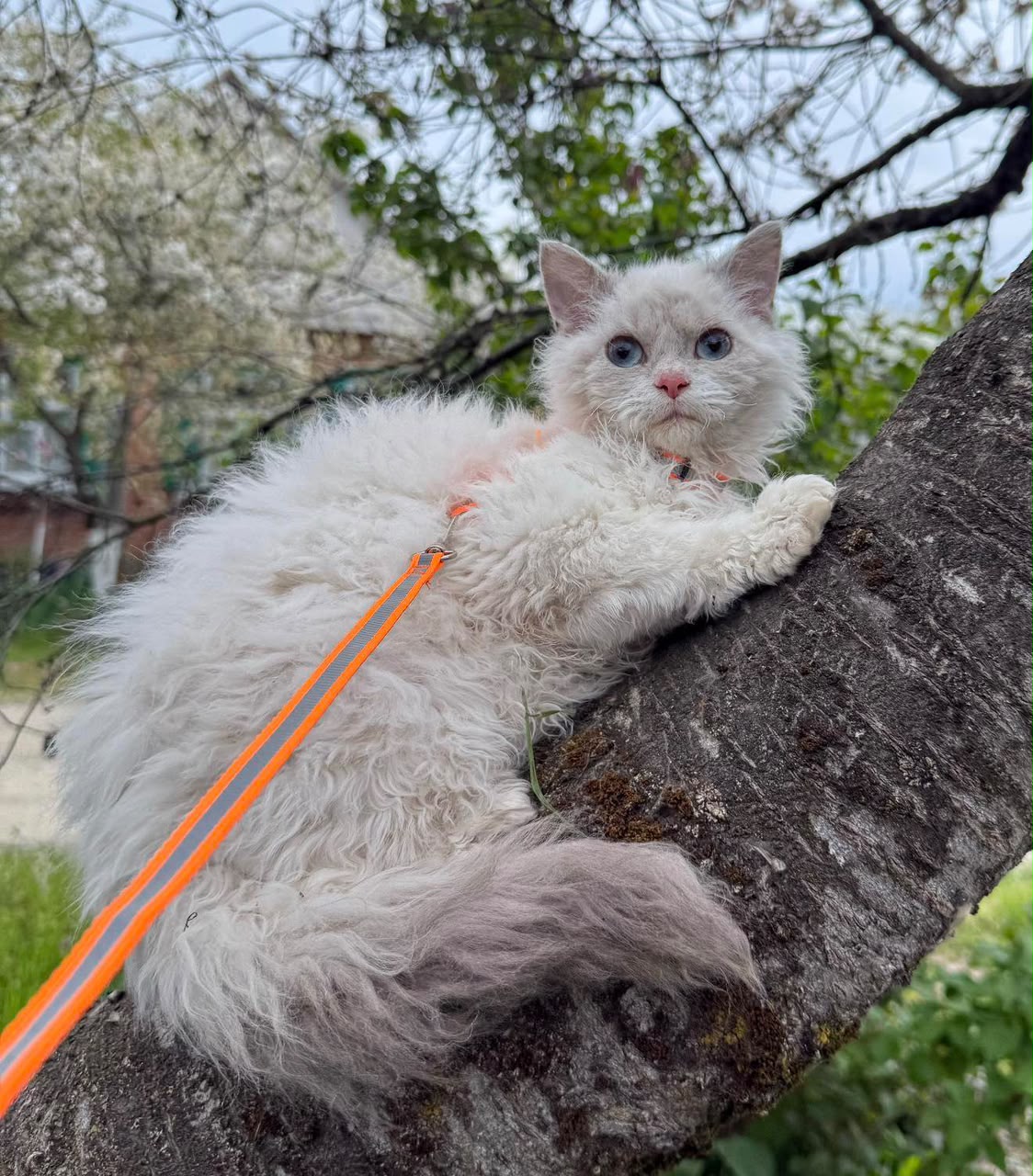
The Selkirk Rex has a distinct, instantly recognizable appearance. The breed standard calls for a medium to large cat with a heavy, muscular body and sturdy bone structure. Despite their solid build they move with grace and have an alert, curious expression.
The head is round and broad with full cheeks, giving the breed its famously sweet expression. The eyes are large and round, set well apart, and can appear in any color regardless of coat color. The ears are medium-sized, set wide on the head, with a slight inward curl in some cats but never the dramatic curl seen in other rex breeds.
Males typically weigh 11 to 16 pounds, while females are smaller at 6 to 12 pounds. The breed reaches full physical maturity slowly, often not filling out until 3 to 4 years of age. Their plush coat gives them a teddy bear appearance that is hard to mistake for any other breed.
Coat varieties
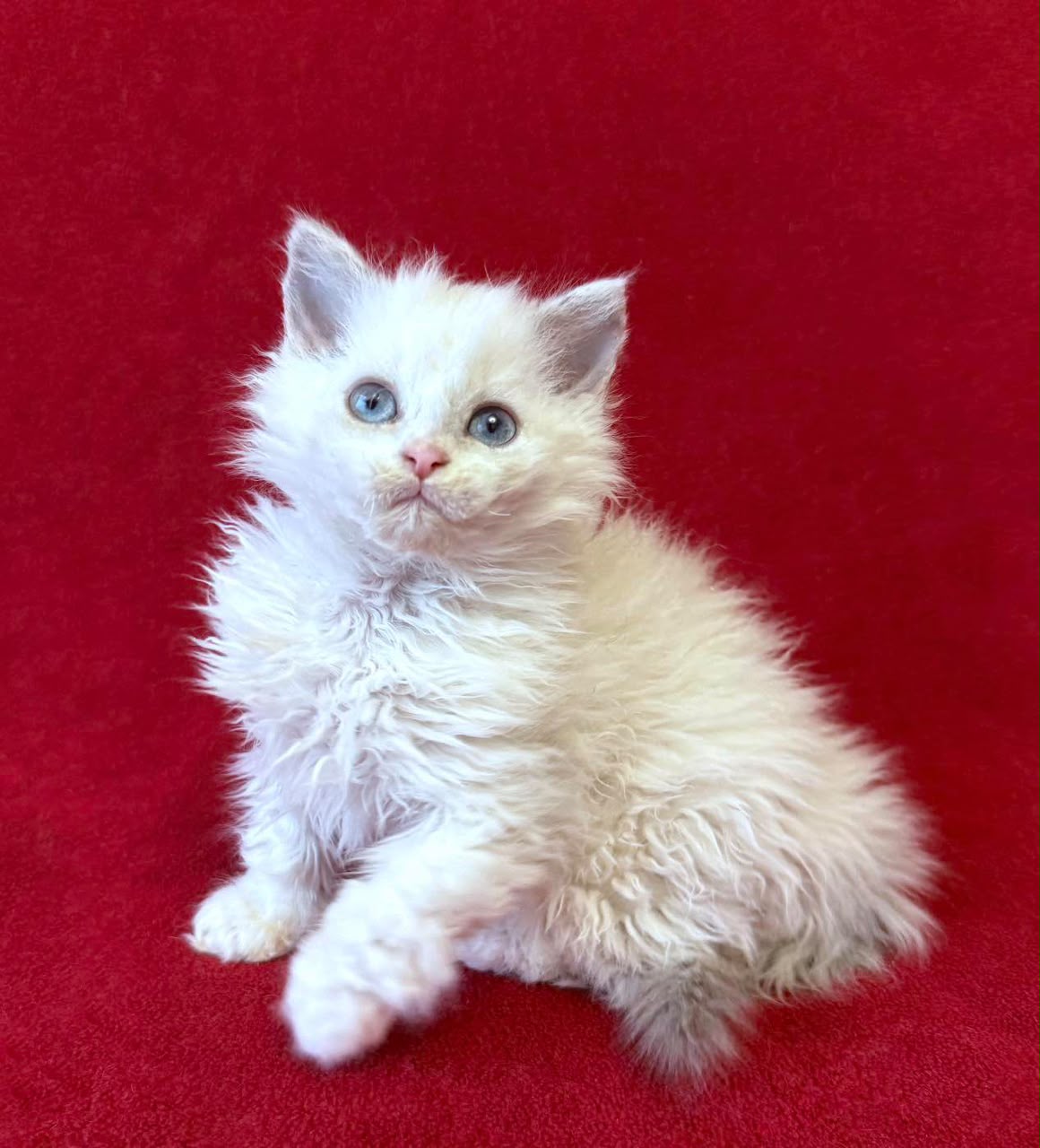
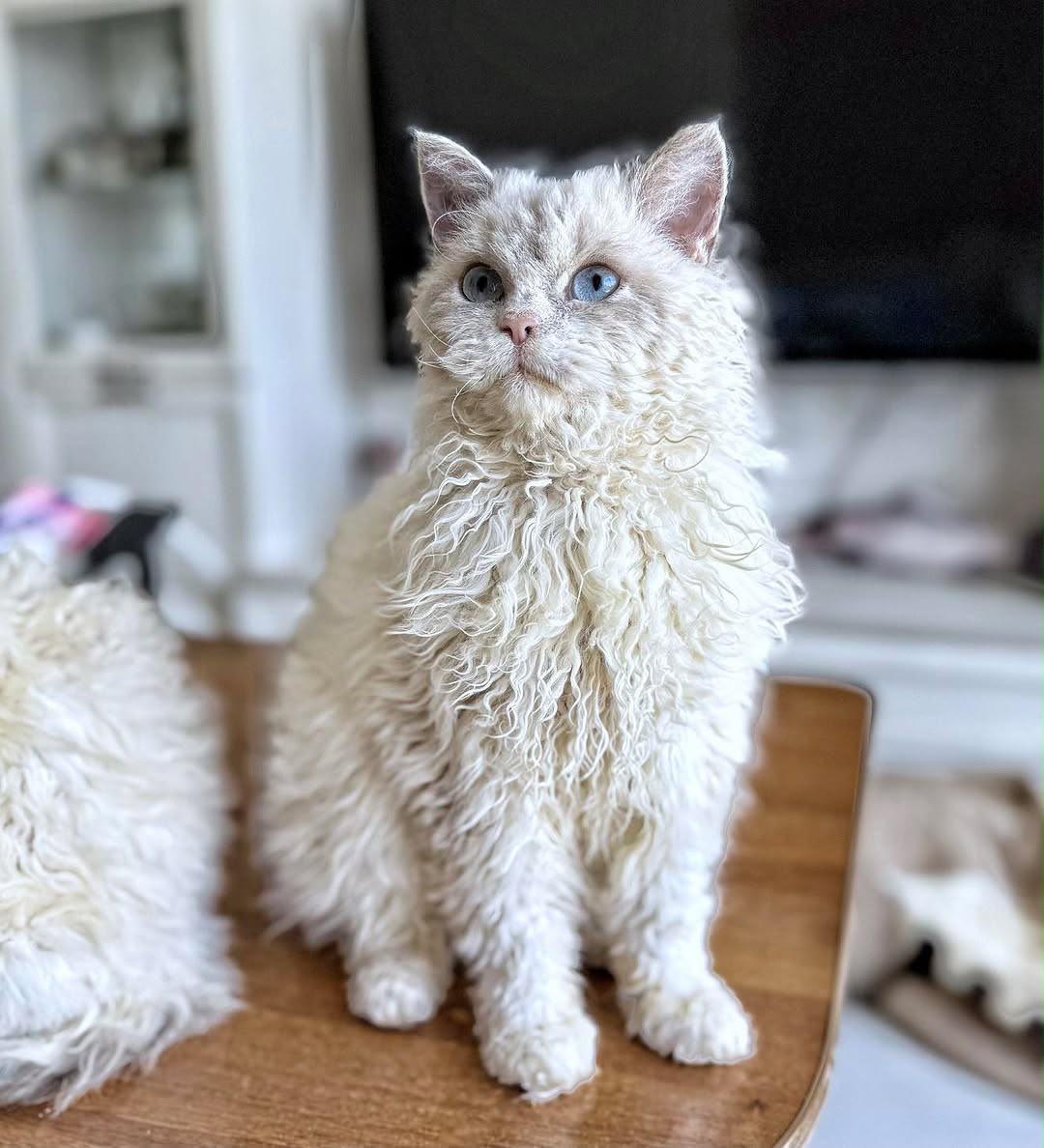
The Selkirk Rex has the unique distinction of being a rex breed with both shorthair and longhair varieties, all accepted in TICA and CFA standards. The curly coat is the result of an incomplete dominant gene, which means kittens can inherit one or two copies of the curl gene with different results.
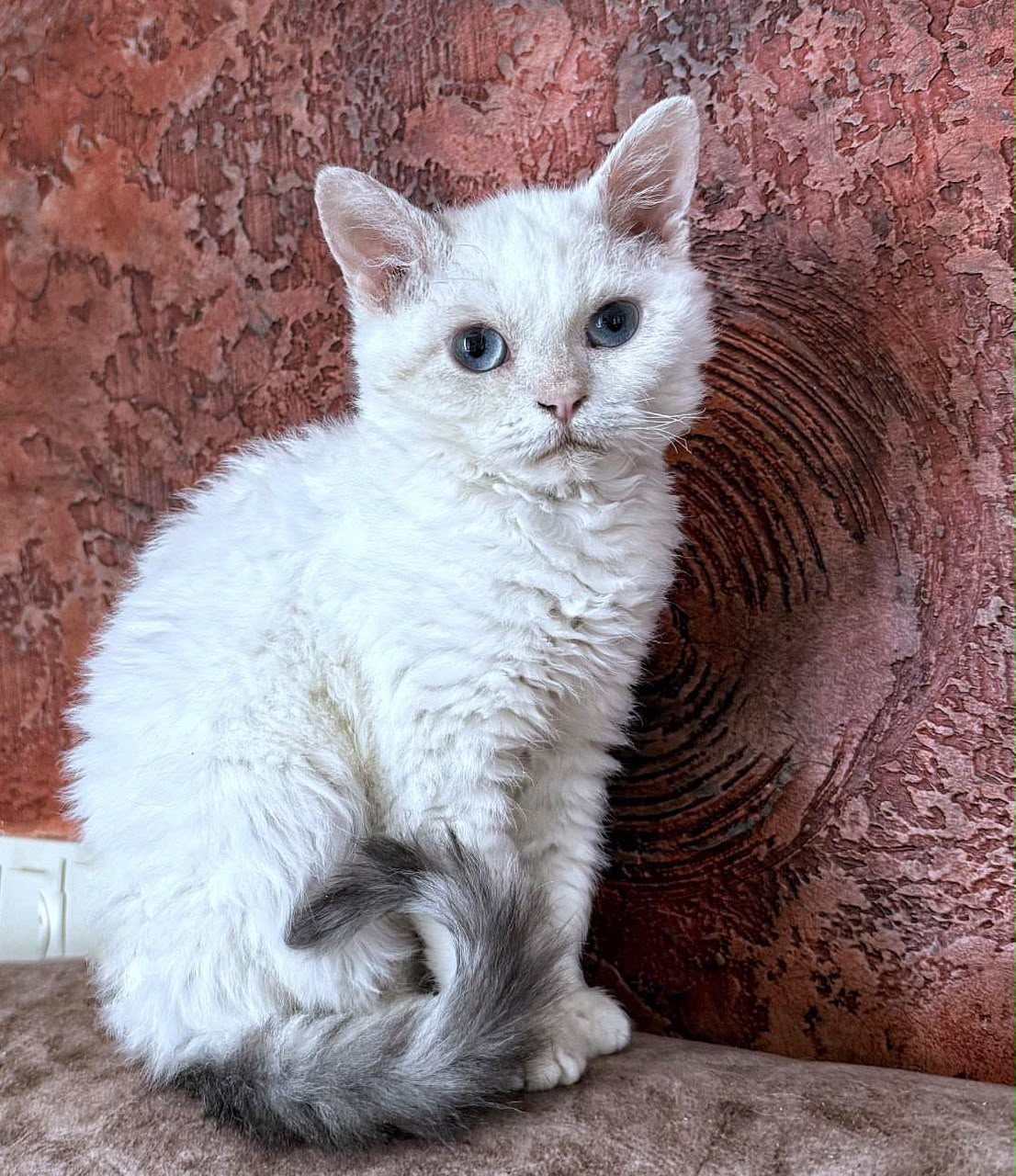
Shorthair Selkirk Rex
Plush, dense curls close to the body. The shorthair variety has a thicker, sheep-like feel. The curls are tightest on the belly, back of the neck, and around the face.
Longhair Selkirk Rex
Full, flowing curls that extend significantly longer, especially on the tail, ruff, and britches. The longhair has a more dramatic, romantic appearance with cascading curls.
Heterozygous versus homozygous
Kittens that inherit one copy of the curl gene are called heterozygous and have softer, looser curls. Kittens that inherit two copies are called homozygous and tend to have tighter, more defined curls. Both are equally healthy and affectionate. Reputable breeders use these designations when planning litters.
Selkirk Rex kittens are born with their curls fully visible. Around 6 weeks the curls relax noticeably, and the kitten coat sheds out from 8 to 10 months as the adult coat develops. The full adult curls return tighter and denser by 1 to 2 years of age.
The breed accepts every color and pattern, including solid colors, tabby, tortoiseshell, calico, pointed, and shaded. There are no color restrictions in the breed standard.
Personality and temperament
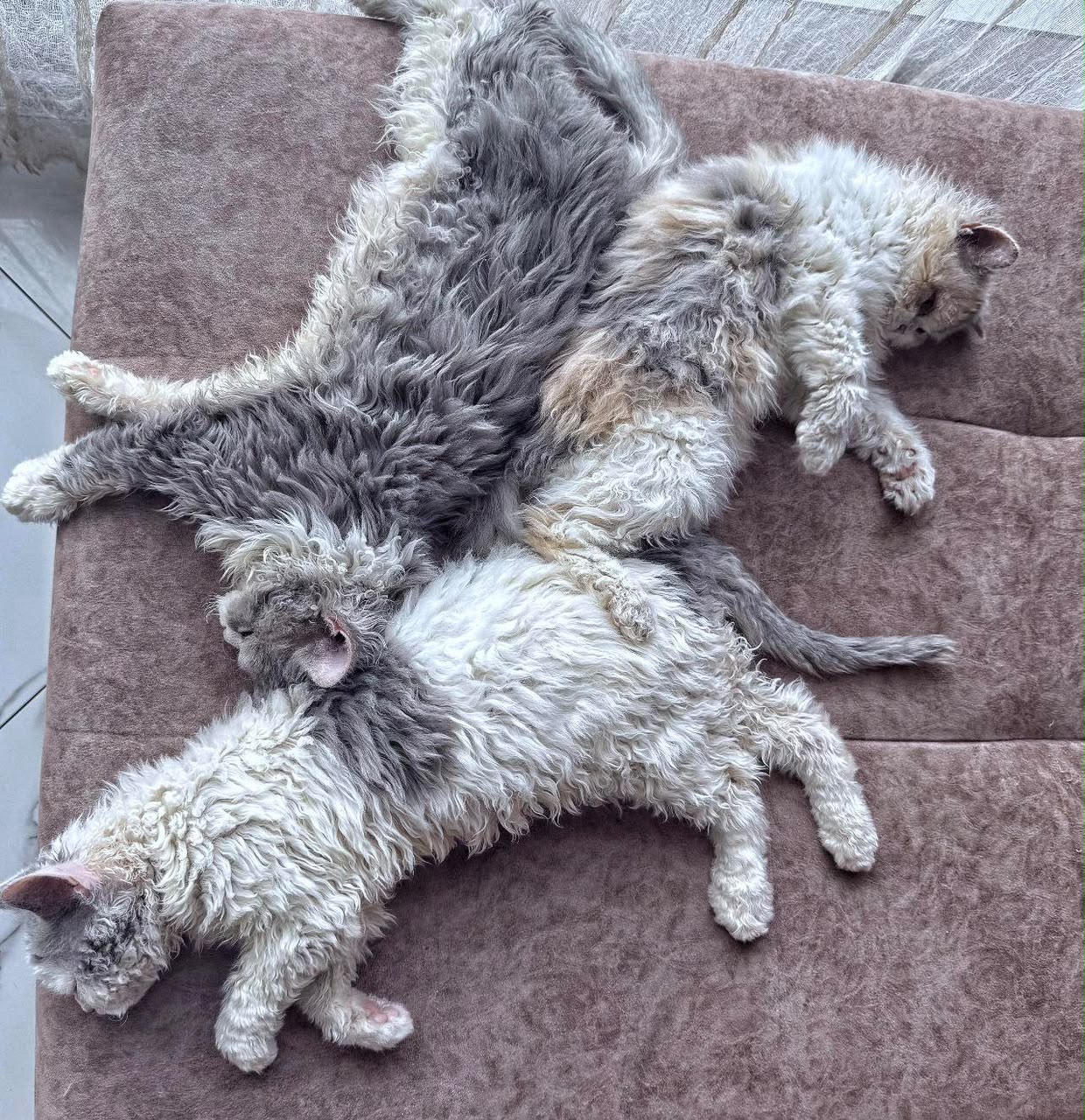
The Selkirk Rex inherits the laid-back nature of its Persian and British Shorthair ancestors but adds a playful, social streak that makes them more interactive than either parent breed. They are widely described as patient, affectionate, and exceptionally tolerant.
This is a cat that will follow you from room to room, settle on your lap the moment you sit down, and tolerate being picked up, carried, and held without fuss. They are not the type of cat that hides from visitors. They will greet new people, often approaching strangers with curiosity rather than retreat.
Selkirk Rex are generally good with respectful children and integrate well with other cats and dogs. They are not highly vocal but will use a quiet chirp or trill to communicate. Their energy level is moderate, which means they enjoy play sessions but spend most of their time being calm companions rather than athletic climbers.
Health considerations
The Selkirk Rex is generally a healthy and robust breed with a lifespan of 10 to 15 years. However, because the breed was developed using Persian and British Shorthair lines, Selkirk Rex can inherit certain conditions from those ancestral breeds. Responsible breeders test for these conditions before breeding.
Polycystic Kidney Disease (PKD)
PKD is an inherited condition where cysts form on the kidneys, leading to kidney failure later in life. It is more common in Persians and Persian-derived breeds. A simple genetic test can identify carriers. All breeding Selkirk Rex should be tested negative for PKD before any breeding occurs.
Hypertrophic Cardiomyopathy (HCM)
HCM is a heart condition where the heart muscle thickens, reducing its ability to pump blood efficiently. It can be inherited or develop later in life. Echocardiogram screening of breeding cats is the gold standard. Genetic testing exists for some HCM variants but not all.
Other considerations
- FIV and FeLV testing. All breeding cats should test negative for Feline Immunodeficiency Virus and Feline Leukemia Virus.
- Dental health. The Selkirk Rex's round face can occasionally lead to crowded teeth. Routine dental care helps.
- Weight management. Their relaxed nature means they can gain weight if overfed. Portion control and play sessions help maintain a healthy weight.
For more on Selkirk Rex health and lifespan, see our guide to Selkirk Rex lifespan.
Care requirements
One of the surprises about Selkirk Rex is that their curly coat actually requires less grooming than most longhair breeds. Over-brushing can damage and straighten the curls, which is the opposite of what you want.
Grooming
Shorthair Selkirk Rex need only a light combing once a week to remove loose hair and prevent any matting around the underarms and belly. Longhair Selkirk Rex benefit from a gentle comb twice a week, with particular attention to the ruff and tail.
Avoid stiff brushes. A wide-tooth comb or gentle slicker brush works best. Brushing the coat too aggressively or too often will straighten the curls.
Bathing
An occasional bath helps maintain the curls and skin health. Use a gentle cat-specific shampoo, rinse thoroughly, and towel dry without rubbing. Let the coat air dry to preserve the curl pattern. Avoid blow dryers.
Diet and nutrition
Selkirk Rex do well on high-quality cat food appropriate for their life stage. As mentioned, watch portions to prevent weight gain. Fresh water should always be available, and many Selkirk Rex enjoy a small water fountain over a still bowl.
For a deeper look at coat care and shedding, read our guide to Selkirk Rex shedding and grooming.
Selkirk Rex compared to other curly breeds
The Selkirk Rex is one of four major rex breeds, each with a distinct coat type, body shape, and personality. Understanding the differences helps prospective owners pick the right breed for their lifestyle.
| Breed | Coat | Body | Personality |
|---|---|---|---|
| Selkirk Rex | Plush curls, full and dense | Medium-large, muscular | Calm, patient, lap cat |
| Devon Rex | Soft, short, wavy | Slender, large ears | Active, mischievous |
| Cornish Rex | Tight marcel waves | Slender, athletic | Energetic, social |
| LaPerm | Soft ringlets and curls | Medium, lean | Affectionate, vocal |
The Selkirk Rex stands out for being the only rex breed with a heavy, muscular body and plush, dense curls. They are also the calmest and most laid-back of the rex breeds, making them ideal for families who want a curly cat without the high energy of Devon or Cornish Rex.
Is the Selkirk Rex right for you?
The Selkirk Rex suits many types of households, but they are not for everyone. Consider these points before deciding.
Great fit if you
- Want a calm, affectionate lap cat that bonds closely with family
- Have children and need a patient, tolerant breed
- Live in an apartment and need a low-activity cat
- Already have other pets and want a sociable cat that adapts well
- Appreciate a cat that follows you around but is not constantly demanding
May not be ideal if you
- Want a highly active, athletic cat that climbs everything
- Cannot commit to weekly grooming
- Are away from home for very long stretches every day
- Have severe cat allergies and have not tested your reaction to the breed
The Selkirk Rex is also a good fit for first-time cat owners because of their forgiving, patient nature. Curious whether they trigger allergies? See our guide to Selkirk Rex and allergies.
Buying a Selkirk Rex kitten
Because the Selkirk Rex is a relatively young and rare breed, finding a reputable breeder takes some research. Quality matters more than convenience.
What a reputable breeder looks like
- TICA or CFA registration. Reputable breeders register their cattery and their breeding cats with one or both organizations.
- Health testing. Both parents should be tested for PKD, HCM, FIV, and FeLV. A breeder should be willing to share results.
- Kittens raised in the home. Selkirk Rex kittens should grow up around humans and household life, not in isolated cattery rooms.
- Minimum 12 weeks before going home. A breeder who sends kittens home before 12 weeks is cutting corners.
- Health guarantee. A written one-year health guarantee covering genetic conditions is standard.
- Lifetime breeder support. A reputable breeder will stay in contact and answer questions for the cat's entire life.
Why TICA registration matters
TICA registration is more than a certificate. It is a record of the kitten's pedigree, parentage, and breed verification. Without it you have no way to confirm a kitten is actually a purebred Selkirk Rex versus a mixed-breed cat sold as one. It also ties the kitten to its breeding line, which matters for future health considerations.
Want to see our breeding cats and meet the kittens we have available right now? Meet our breeding cats or browse available kittens.
Ready to meet a Selkirk Rex?
Browse our available kittens or join the waitlist for an upcoming litter. Every Selkirkish kitten is TICA registered, health tested, and raised underfoot in our home.